Pioneering dentist falls out at OHSU
The AIDS patients David Rosenstein has treated for decades will hear less of The Laugh now that he's out as clinic director
Thursday, June 22, 2006
By JULIE SULLIVAN | THE OREGONIAN
The Laugh rounds the corner before the man does, a full body cackle that carries past the Russell Street Clinic’s avocado-green doors. If the decor hasn’t changed since 1975, it’s because the man responsible — for The Laugh and everything else at the public clinic — can’t see that decorating does anything for patients.
He powers up to a waiting patient. “I’m David,” says David Rosenstein, thrusting out a hand. He may be one of Oregon’s most prominent dentists, but he’s wearing black jeans he buys at Costco.
Before him, a man with HIV waits trembling in a dental chair. Rosenstein chats away, injecting Novocaine around 17 black and broken teeth. Then, he begins, pulling one tooth, then another. “Sorry this is taking so long,” he says, hands flying to the dental tray where the teeth land with a plink, plink, clatter.
“Done,” Rosenstein says — nine minutes later. Then he realizes, “we’ve got teeth on the floor.”
“And a song in our hearts,” deadpans assistant Steve Aubrey.
The Laugh rises as Rosenstein writes a pain-relief prescription. “Do not drive a car,” Rosenstein tells the patient. “Do not pick up a chain saw. This can interfere with decision making; so no marriages or divorces. Call this number if you have any problems. Do you have any questions?
“Do you have any answers?”
The patient laughs aloud then, exhibiting a wide, cotton-packed grin.
“Within the world of community health care,” says longtime colleague Bob Johnson, “David Rosenstein stands alone.”
Since he founded Oregon Health & Science University’s Russell Street Clinic in North Portland, colleagues say that Rosenstein single-handedly built and funded a national model for treating the poor, homeless and HIV-infected. He’s been awarded more than $13.4 million in grants, including two of the most prestigious National Institutes of Health research grants.
He’s sent more than 100 students into public health careers. He’s the expert evaluating 300 public dental clinics for the federal government and investigating 80 percent of all disputed malpractice claims in community health centers.
He’s collected honors from the U.S. assistant secretary for health, the Harvard School of Dental Medicine and the American Public Health Association, which awards an annual scholarship in his name.
And at 61 — he’s out.
The OHSU School of Dentistry replaced Rosenstein as clinic director and department chairman in April after Dean Jack Clinton moved to end his contract. Top OHSU administrators intervened, renegotiating an indefinite agreement in which Rosenstein will continue to see AIDS patients one day a week and will administer a $1 million training grant.
But the unceremonious end to an illustrious career — officially noted in a single sentence in a press release on his successor — led one dentist to quit Russell Street. Others are dismayed.
“David deserves nothing but the best send-off and celebration,” says Gary Chiodo, chief compliance officer at OHSU. “It saddens me that he is winding down his career feeling disrespected in any way. Here is someone who put his heart and soul into those who needed it most and who were rejected the most. A career like his is rare.”
A mystery disease
When reports that a new disease was killing young men first emerged in 1981, fear rose faster than the death toll climbing across American cities.
Among the symptoms were bizarre canker sores, thrush and gum infections. Dentists did not know what to do with signs of the “gay-related immune deficiency syndrome.”
“It was,” said Toni Eigner, OHSU associate professor, “an epidemic made for David.”
From his tiny office at OHSU, Rosenstein — chairman of the community dentistry department at 31, a full professor at 35 — threw open the Russell Street Clinic, where he’d been treating Portland’s poor, to those with what was later identified as AIDS. Chiodo, then a young staff dentist, accepted the first patient in 1983.
Soon, Russell Street dentists were treating infected men from across the Northwest. Rosenstein presented more than 50 papers worldwide and published 15 articles on HIV-AIDS alone, conducted research and financed the care of AIDS sufferers. Almost all his early patients died. Only when drugs began extending lives — and doubling the patient load — did Rosenstein’s work become visible.
Gregory Fowler of Portland was at a regional retreat for HIV-AIDS patients six years ago when he realized that those living in other states had horrible teeth. “We looked different in Oregon,” Fowler said, “because of David and Russell Street.”
Then two years ago, Rosenstein retired to take advantage of Oregon’s Public Employees Retirement System. He was named professor emeritus and, like several OHSU employees, maintained his role on a part-time contract. But this winter, Dean Clinton decided he wanted new leadership and moved to cancel the contract.
The change had nothing to do with competence or management, says Leslie Hallick, OHSU provost and vice president for academic affairs. “This is absolutely about leadership style.”
The dean named Bob Johnson, a longtime Russell Street dentist and Rosenstein’s bridge partner, as interim director and community dentistry chairman. “Bob has a very easy personality; he matches up quite well with me,” Clinton says.
Rosenstein made it clear that leaving was unacceptable. “Upon reflection, it was unacceptable to us, also,” Clinton says. “David has a great history there. Everything over there has his name on it.”
Clinic staff fear that increased involvement by OHSU — without Rosenstein’s fundraising and ability to motivate staff — will mean fewer poor Portlanders will get care.
“There is an enormous difference now that David is not here,” says Selynn Chiang, a dentist who left Russell Street on Friday as “a direct result” of Rosenstein’s departure. “I think they pushed him out — to the detriment of public health.”
Clinton acknowledges that “this whole thing is about two strong personalities, and I certainly take credit for half of it.”
“If I had a different personality,” Rosenstein says, “I’d still be in a housing project.”
Fighting Mad
Rosenstein’s earliest memories are of the landlord demanding rent and of the Boston police hauling his father home for being drunk. But the elder Rosenstein didn’t drink as well, by muscular dystrophy that eventually confined her to bed.
With neither parent working, Rosenstein and his older brother grew up in a Boston public housing project. Small, severely asthmatic and Jewish in a scrum of Irish American and African American kids, he learned to fight. He learned to steal, too, taking a 1958 two-door Buick, a theft that left him, at 13, a ward of the court. He was sentenced to reform school and then to a residential home for troubled boys until he was 16.
Stable, and in school, Rosenstein began applying for colleges. But the street fighter in him was bone deep. Leaving one scholarship interview, he couldn’t resist telling the other students waiting, “You don’t stand a chance.”
“I don’t have an edit function,” he admits with The Laugh. “I came to grips with my personality a long time ago. I knew I had to fight, or I would get hurt.”
Rosenstein completed a biology degree at Boston University then headed to dental school intent on being rich enough to live in an apartment — he’d never been inside a single-family home. Then a mentor persuaded him to transfer to her alma mater, the Harvard School of Dental Medicine.
It was a dream come true for a Boston kid. But when he arrived on the coveted campus, Rosenstein says, “I grew very, very angry.” The students weren’t smarter or harder working than his housing project classmates, he says. “They just had wealthier parents. It was a travesty.” He decided to dedicate his life to the poor.
He earned two more master’s degrees in socio medical science and public health at Columbia University and at the University of California at Berkeley. He and his wife, optometrist Diane Pomeranz, moved to Portland, where he joined OHSU in 1974.
Dean Louis Terkla hired him to run the community dentistry program, where he established himself as hardworking and extremely outspoken. “He had a very strong concept of right and wrong, especially in academics,” Terkla says. “There were a lot of people who could not deal with him.”
In a conservative profession, Rosenstein voted “left of Ted Kennedy, in fact, far to the left.” He encouraged suing dentists who ducked AIDS patients. When rural caregivers complained of no access to services at a public hearing, he asked what they expected, living in rural Oregon. But then he threw himself into improving their access. On committee after committee — Rosenstein served on more than 40 — he challenged members to care for the poorest and most disabled.
“Portlanders are very polite. They beat around the bush and don’t say what they mean or want to hurt anyone’s feelings,” says Maria Kosnetatos, a nurse practitioner at Multnomah County’s HIV clinic. “David is not like that. He is very direct.”
Some colleagues had a hard time handling Rosenstein’s assertiveness. Others became true believers. Dentist Matthew Jervis says Rosenstein was a nearly lone voice at OHSU, insisting dentists treat the poor. “He assumed we chose dentistry as a career because we are good people and want to help others.”
Eigner, who has opened dental clinics in Cameroon and Katmandu, as well as heading OHSU’s hospital dental program, says Rosenstein’s passion inspired her to work at Russell Street for 26 years. All Russell Street dentists and hygienists are OHSU faculty or instructors.
Rosenstein’s connections became obvious in 2004, when Multnomah County abruptly canceled a 28-year-old financial partnership with Russell Street to serve the poor, a move Rosenstein saw as a bitter betrayal but which the county defended as a strict cost savings. Still Rosenstein, frantic to keep staff and patients, in one day found replacement contracts to keep the clinic open.
“He’s delusionally optimistic,” Eigner says. “He believes pigs can fly, and he’s made this one fly for 30 years.”
A Challenging Practice
Inside the squat nondescript clinic near Legacy Emanuel Hospital & Health Center, a man in a motorized scooter asks in Spanish why his appointment was canceled. The receptionist, juggling a phone and a file, holds up a finger until she can locate a Spanish speaker. Around them, men, women, children wait for fillings, extractions and crowns. More than $262,000 worth of procedures were performed at the clinic in April in 773 patient visits. More than one-third of those were people with HIV.
One a recent day, the front desk was shorthanded. One staffer left early with police over a traffic incident. And, then there was the former dental assistant who’d gone to prison for killing her husband. “Life should be about giving people second chances,” Rosenstein maintains. “Most of us need second chances. Not many of us are perfect and get it right the first time.”
The clinic has been broken into twice in the past three years, says clinic Administrator Stephani Sheldon. Dentists juggle jampacked schedules and often see patients who don't behave predictably. Rosenstein has been stuck twice with a needle while treating infected patients and underwent HIV tests — both negative.
“It’s very high stress,” Sheldon says. “Providers are bombarded with patients who are in pain or mentally unstable. And it’s dentistry — you’re in people’s mouths, and they hate it. A lot of people are just not happy about being here.”
Rosenstein who treats people with HIV exclusively, begins examinations asking about T-cell counts and their physician — HIV-AIDS and the drugs used to treat them speed tooth loss. He’s as likely to connect them to services as he is to fill a tooth. “He’s a resource center,” says Tom Mason, 55, a patient for 15 years.
Debbie Jones, 53, was visibly nervous about losing her two remaining teeth — until she heard Rosenstein’s constant banter. Laughing, she said, “This is going to be OK.”
“Everyone on the planet is afraid of the dentist, including myself,” Rosenstein says. “If I can do that and make someone comfortable, I’ve achieved my goal.”
But he also delights in shocking people. Rosenstein and Johnson won a national bridge championship in 1996. At one tournament, Rosenstein was introduced to Harvard dropout-turned-billionaire Bill Gates. “Bill, I don’t want to make you feel bad,” Rosenstein recalls saying, “But I actually graduated from Harvard.”
Still, his daughter, Rebecca, a public defender in Medford, and son, David, a physician, didn’t suspect his practice was unusual until they found a drag queen’s boa feathers at their house after his 50th birthday. Rosenstein never spoke of his impoverished upbringing either until longtime patient Jack Cox revealed it to students as a guest lecturer at OHSU. (Rosenstein responded by telling Cox his zipper was down.)
There has been no formal recognition of his departure at OHSU. “If there was a party,” he says, “it was a surprise.” Still, the Russell Street staff, many of whom have dinner together weekly, have petitioned the university and alumni association with pages of written accolades.
So why doesn’t he just accept the applause and gracefully leave the stage?
“This,” Rosenstein says, “is all I’ve ever wanted to do.”
On his first day back at Russell Street as a part-time dentist, he surveyed the bustle saying, “Man, the management of this place is god awful.”
“Yep,” a colleague agreed. “Been that way for years.”
Photo Captions & Quotes
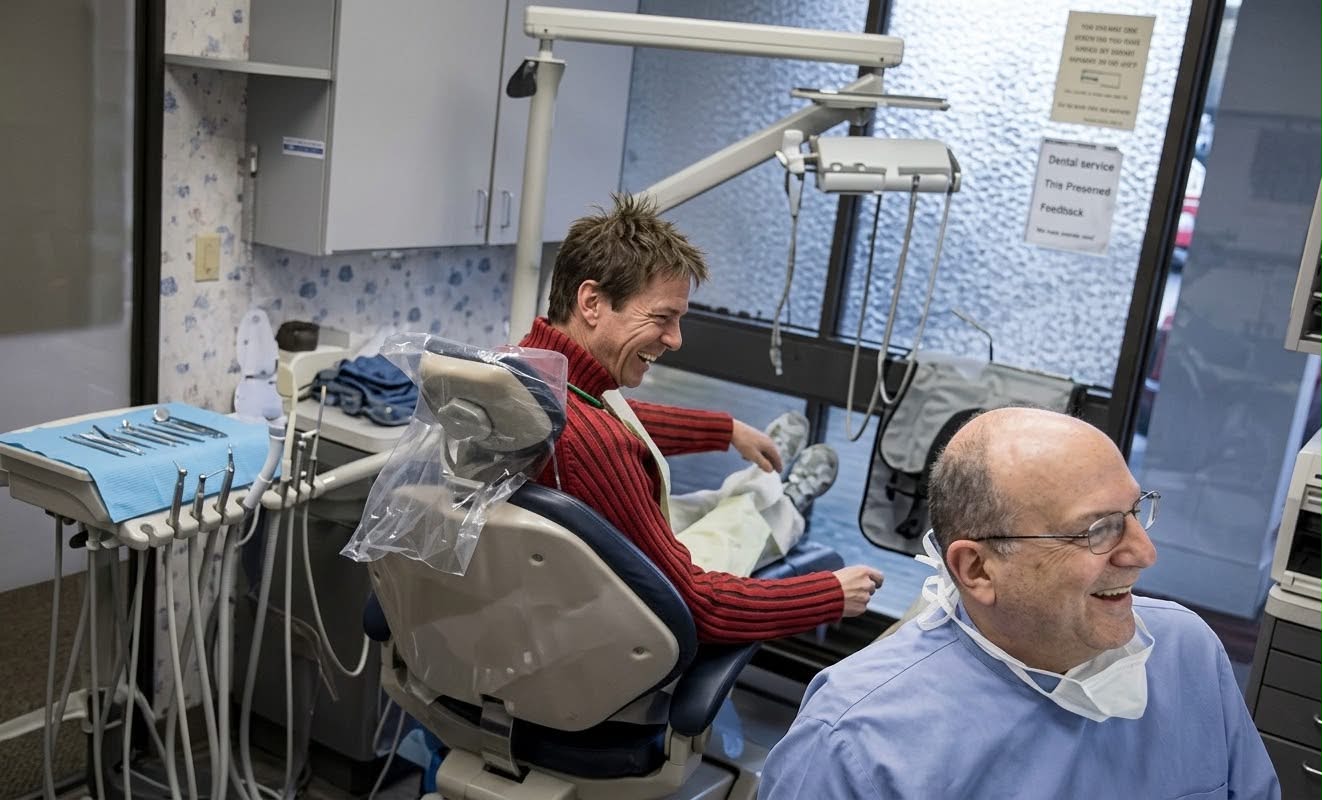
Front Page Photo (Rosenstein and patient):
Alfie Pettit, 36, of Vancouver laughs during a visit with his longtime dentist, David Rosenstein. “He tells it like it is, which I appreciate,” Pettit says. “I always feel good about going to him. He isn’t going to tell me I need things done that I don’t need done. That’s why I keep going back.” Pettit has been HIV-positive for 20 years.
(Photo: TORSTEN KJELLSTRAND/THE OREGONIAN)
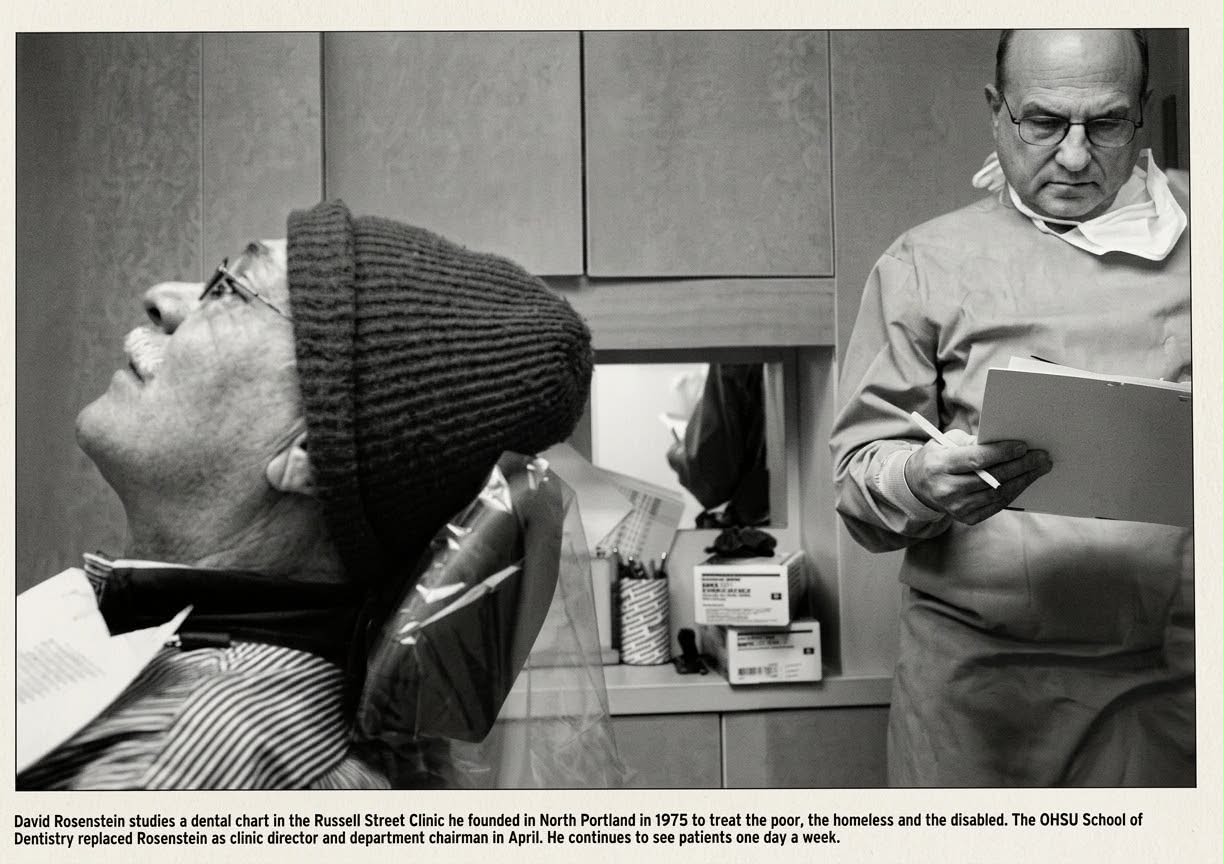
Page A11 Top Photo (Rosenstein looking at dental chart):
David Rosenstein studies a dental chart in the Russell Street Clinic he founded in North Portland in 1975 to treat the poor, the homeless and the disabled. The OHSU School of Dentistry replaced Rosenstein as clinic director and department chairman in April. He continues to see patients one day a week.
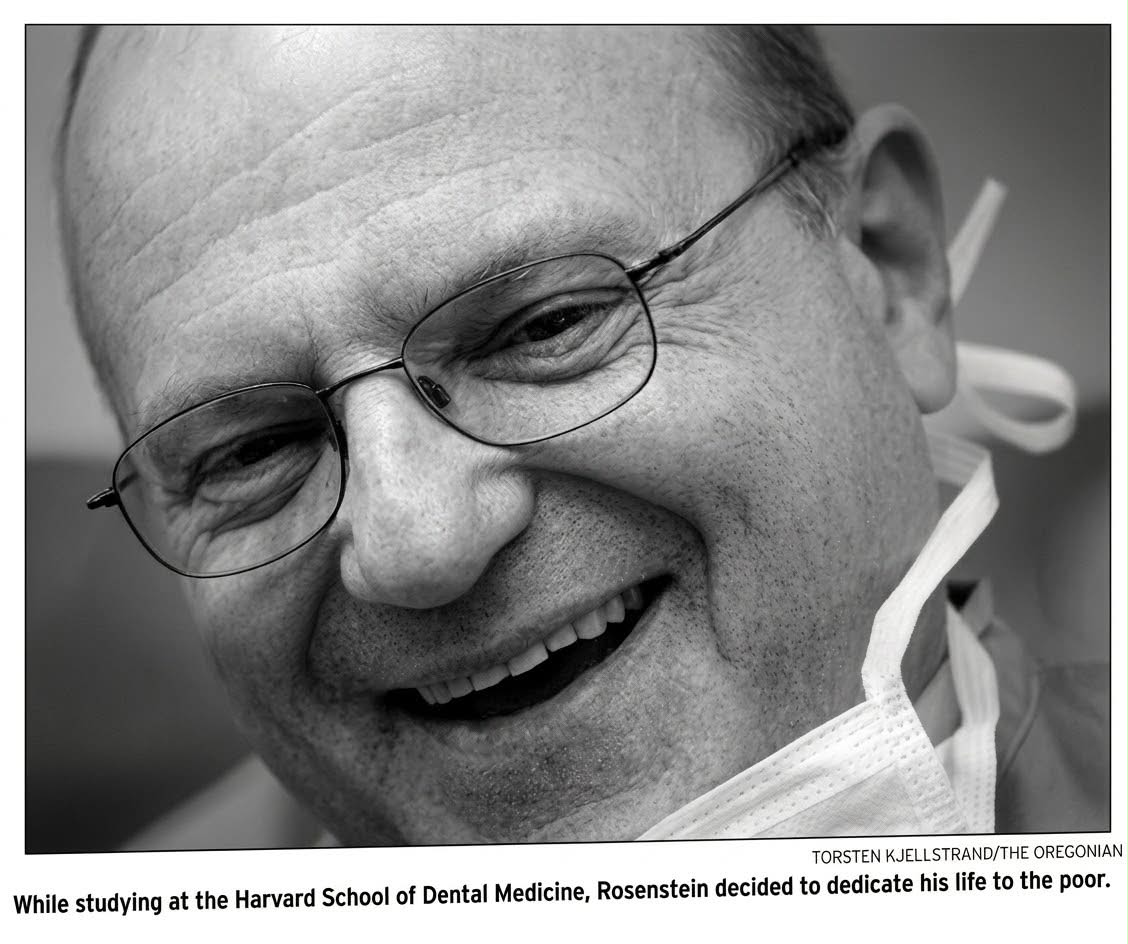
While studying at the Harvard School of Dental Medicine, Rosenstein decided to dedicate his life to the poor.
(Photo: TORSTEN KJELLSTRAND/THE OREGONIAN)
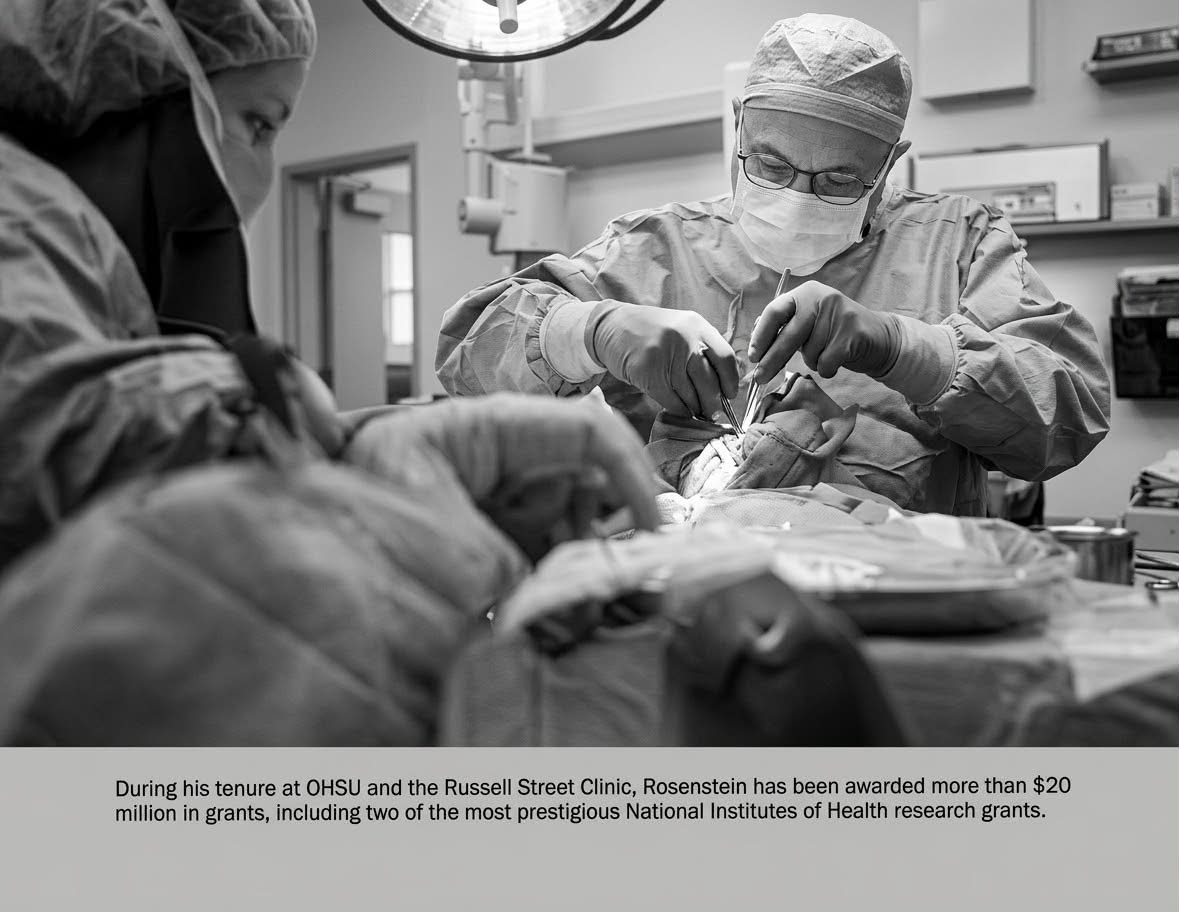
During his tenure at OHSU and the Russell Street Clinic, Rosenstein has been awarded more than $13.4 million in grants, including two of the most prestigious National Institutes of Health research grants.
(Photo: TORSTEN KJELLSTRAND/THE OREGONIAN)
Pull Quote:
“David deserves nothing but the best send-off and celebration. It saddens me that he is winding down his career feeling disrespected in any way. Here is someone who put his heart and soul into those who needed it most and who were rejected the most. A career like his is rare.”
— Gary Chiodo, chief compliance officer at OHSU